How Gold Prices Are Determined: Spot, Futures and Local Rates
From the London benchmark auction and New York futures to the rate at your local jeweler: every layer that shapes the price you pay.
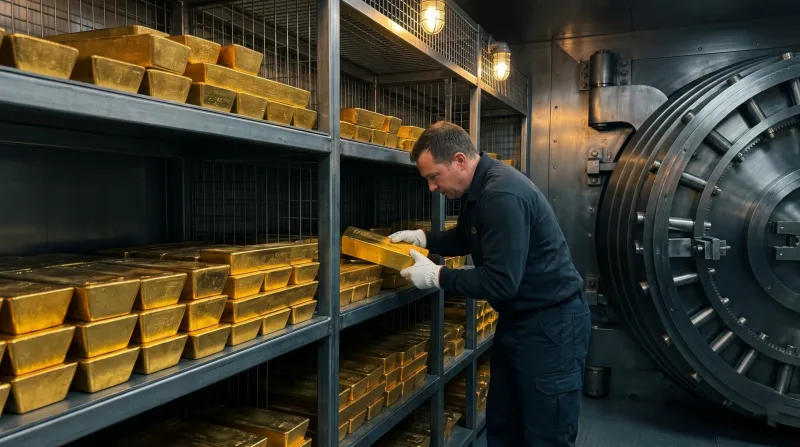
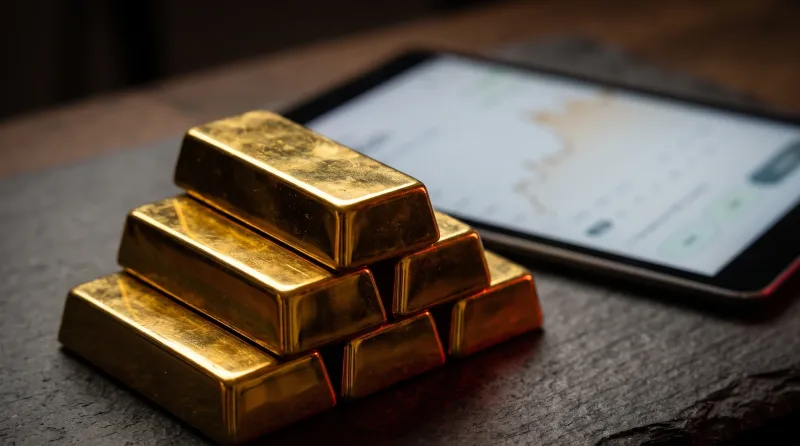
The short answer: How gold prices are determined comes down to global trading. The benchmark is set in London through the LBMA Gold Price auction twice each business day, while futures trading on exchanges such as COMEX in New York moves the price minute by minute. The local price you pay in a city then adds currency conversion, import duties, taxes and dealer margins on top.
The global gold price: spot, benchmark and futures
Gold is traded around the clock in three main ways:
- Spot (over-the-counter) market: banks and dealers trade wholesale gold, mostly in London. This creates the spot price you see quoted online.
- LBMA Gold Price: an electronic auction run by ICE Benchmark Administration at 10:30 and 15:00 London time sets a benchmark used in contracts worldwide.
- Futures exchanges: contracts for future delivery on COMEX (CME Group) in New York, and exchanges in Shanghai and India, see heavy trading that moves prices quickly.
Why it matters: when you read "gold rose 1% today", it almost always refers to the US dollar spot price per troy ounce (about 31.1 grams).
How gold prices are determined day to day: the key drivers
| Driver | Typical effect |
|---|---|
| Real interest rates | Lower real rates usually support gold, since it pays no interest |
| US dollar | A weaker dollar often lifts the dollar gold price |
| Central bank buying | Large purchases in recent years have been a major support |
| Fear and uncertainty | Wars, crises and market crashes increase safe-haven demand |
| ETF flows | Investors buying gold funds adds demand |
| Jewelry demand | Strong in India and China; often falls when prices spike |
By the numbers: according to the World Gold Council, central banks have bought more than 1,000 tonnes of gold a year in several recent years, well above the previous decade's average, which helped push prices to records above $4,000 an ounce in 2025 and 2026.
From global price to local rate
Your local gold rate starts with the dollar spot price and adds several layers:
- Currency conversion: the dollar price is converted to rupees, dirhams, pounds or other currency. A weaker local currency raises the local price even if global gold is flat.
- Import duty: many countries, including India, charge customs duty on gold imports.
- Taxes: such as GST in India or VAT in some countries (investment gold is VAT-exempt in the EU).
- Dealer premium: the margin a bank or dealer adds for coins and bars.
- Making charges: for jewelry, a labor charge per gram or as a percentage.
In India, jewelers' associations publish daily reference rates, and the Indian Bullion and Jewellers Association rates are widely quoted. City rates differ slightly because of local levies, transport and competition.
Purity: 24K, 22K and 18K
Price quotes depend on purity. 24-karat gold is about 99.9% pure, 22-karat about 91.6% and 18-karat 75%. Jewelry is usually 22K or 18K, so its gold value per gram is lower than the 24K rate. Look for hallmarks, such as BIS hallmarking with a unique ID in India.
Why prices differ between websites
Different sites may show the spot price, the futures price, a benchmark or a retail rate with taxes, and may update at different times. Always check which one you are seeing before comparing.
Investors comparing gold with other assets can read gold vs stocks, and our guide to interest rates and stocks explains why rate expectations move markets.
How to check a fair price before you buy
- Look up the current 24K rate per gram in your city from a trusted source.
- Adjust for purity: multiply by 0.916 for 22K jewelry or 0.75 for 18K.
- Add the applicable tax, such as 3% GST on gold in India.
- Compare making charges between jewelers, as they vary widely.
- Ask for the buy-back rate too, since it shows how much you would get if you sold.
For long-term investors, low-cost gold ETFs avoid making charges entirely. Our guide on ETF vs mutual fund explains how these funds work.
The bottom line: How gold prices are determined starts with global trading in London and New York, measured in dollars per ounce. Your local rate adds currency moves, duties, taxes and dealer margins, which is why the price in Hyderabad, Dubai and New York is never quite the same.
Frequently asked questions
Who sets the price of gold?
No single person or body. Prices come from trading between banks, dealers and investors, with the LBMA auction providing a benchmark twice a day.
Why is gold cheaper in Dubai than India?
Mainly because India adds import duty and GST, while the UAE has lower taxes on gold. Making charges also differ.
What is a troy ounce?
The standard weight for precious metals, about 31.1 grams, slightly heavier than a regular ounce.
This article is for education only and is not investment advice.
This article is for information only and is not investment, tax or legal advice. Prices and data may be delayed. Read our financial disclaimer.
Sources
Spotted an error? Email info@nodelyf.com. See our corrections policy.