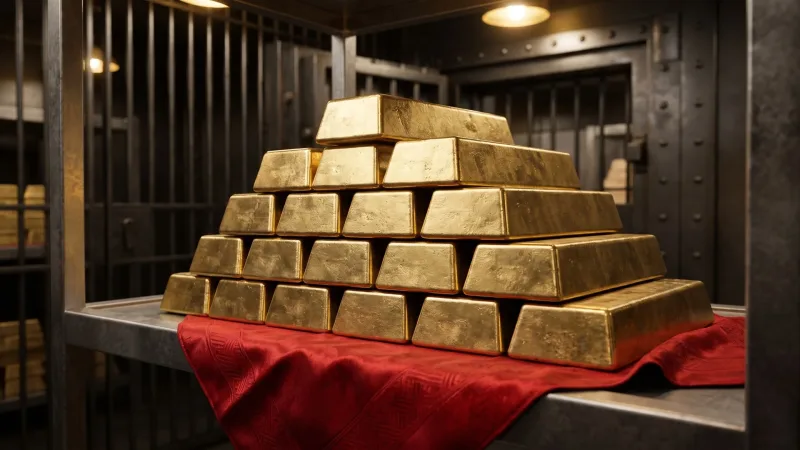
Gold vs Stocks: Which Is Better for Long-Term Investors?
Stocks build wealth through growing earnings; gold protects against shocks. Why most long-term portfolios hold both, in very different amounts.

The short answer: In the gold vs stocks debate, stocks have historically delivered higher long-term returns because companies grow earnings and pay dividends, while gold produces no income. Gold's strength is different: it often holds value during crises, inflation scares and currency weakness. Many long-term investors therefore hold mostly stocks for growth and a small slice of gold, often around 5% to 10%, for diversification.
Gold vs stocks: what you actually own
A stock is part ownership of a company. Its value depends on the company's profits, now and in the future, and many stocks also pay dividends. Gold is a physical metal. It does not grow, pay interest or produce anything; its price depends on what other people will pay for it.
Why it matters: this difference explains most of their long-term behavior. Stocks compound as businesses reinvest profits. Gold mainly preserves purchasing power and reacts to fear, interest rates and the US dollar.
How they have performed
Over many decades, broad stock indexes such as the S&P 500 have generally produced higher total returns than gold, once dividends are reinvested. But there have been long stretches when gold won, such as the 1970s and parts of the 2000s, and gold reached record highs above $4,000 an ounce during 2026 as central banks kept buying and investors sought safety.
Yes, but: results depend heavily on start and end dates. Anyone comparing the two should look at several periods, not just the most recent one.
| Feature | Stocks | Gold |
|---|---|---|
| Income | Dividends from many companies | None |
| Long-term growth driver | Company earnings | Demand from investors, jewelry and central banks |
| Behavior in crises | Often falls sharply | Often holds up or rises |
| Inflation | Mixed in the short run, strong over decades | Seen as a hedge, though inconsistent year to year |
| Costs of holding | Low with index funds | Storage, insurance or fund fees; making charges on jewelry |
Why gold behaves differently
Gold prices are influenced by real interest rates (rates after inflation), the US dollar, central bank purchases and investor fear. When real rates fall or uncertainty rises, holding a metal that pays nothing becomes less costly, and demand rises. Our explainer on how gold prices are determined goes deeper, and interest rates and stocks explains the other side.
How investors combine them
Because gold and stocks often move differently, a small gold allocation can smooth a portfolio's ups and downs. Many financial planners suggest something in the range of 5% to 10% for investors who want that balance, though there is no universal rule.
- Growth-focused, long horizon: mostly stock index funds, little or no gold.
- Balanced: stocks and bonds, with a small gold position.
- Cautious or near retirement: more bonds and cash, gold as a modest hedge.
Ways to own each
Stocks are easiest through low-cost index funds or ETFs; see ETF vs mutual fund and how to start investing in stocks. Gold can be held as coins and bars, gold ETFs, or, in India, sovereign gold bonds when available and digital gold. Jewelry carries making charges and is a poor pure investment.
What history shows during crises
During the 2008 financial crisis, global stocks fell by around half from their peak, while gold ended 2008 higher in US dollar terms. In the sharp market drop of early 2020, gold also held up better than stocks after a brief sell-off. This pattern is not guaranteed; gold sometimes falls alongside stocks when investors sell everything for cash. But over many crises it has tended to cushion portfolios, which is the main reason investors hold it.
Costs and taxes to compare
Index funds that track stocks can cost well under 0.2% a year. Gold ETFs charge similar or slightly higher fees, while physical gold carries dealer premiums, storage and insurance. Tax treatment also differs by country; in the US, physical gold and many gold funds are taxed as collectibles at a higher maximum rate than long-term stock gains. Check local rules before choosing a vehicle.
The bottom line: In gold vs stocks, stocks are the main engine of long-term wealth, while gold is insurance against shocks. For most long-term investors the answer is not either-or, but a stock-heavy portfolio with a small, steady gold allocation.
Frequently asked questions
Is gold a better investment than stocks?
Over most long periods, stocks have returned more. Gold can outperform during crises or high inflation, which is why it works better as a diversifier than a replacement.
How much gold should I hold?
Many planners suggest 5% to 10% of a portfolio, but the right amount depends on your situation. Consider speaking to a registered adviser.
Does gold pay dividends?
No. Gold earns nothing while you hold it; returns come only from price changes.
This article is for education only and is not investment advice.
This article is for information only and is not investment, tax or legal advice. Prices and data may be delayed. Read our financial disclaimer.
Sources
Spotted an error? Email info@nodelyf.com. See our corrections policy.