Bank of England Interest Rate Decision: Will Rates Rise in November?
Bank Rate has held at 3.75% all year, but three of nine policymakers now want a hike. What a rise would mean for you.
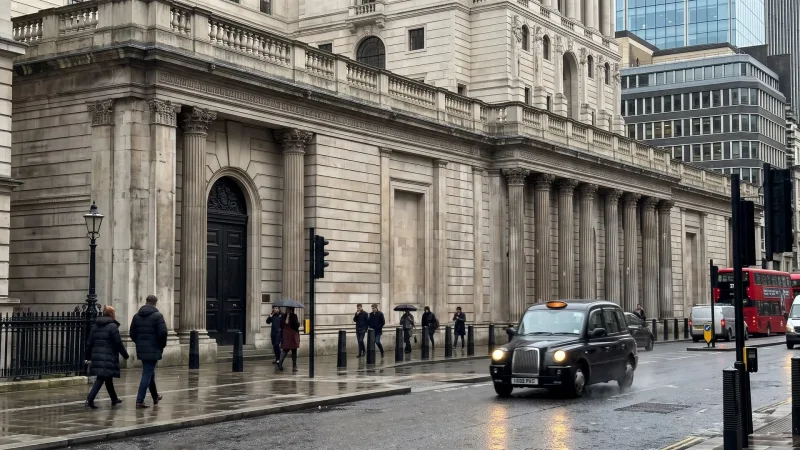
The short answer: The Bank of England interest rate, known as Bank Rate, stands at 3.75% after the Monetary Policy Committee held it in September 2026 by a 6–3 vote. Three members wanted a rise to 4%. With energy prices pushing inflation higher and the Bank expecting it to reach around 3.75% by late 2026, the November 5 decision could bring a hike. That matters for mortgages, savings, the pound and UK shares.
Bank of England interest rate: where things stand
| Meeting (2026) | Decision | Vote |
|---|---|---|
| March | Hold at 3.75% | Unanimous |
| June | Hold at 3.75% | 7–2 (two for a hike) |
| July | Hold at 3.75% | 6–3 |
| September | Hold at 3.75% | 6–3 (three for 4%) |
| November 5 | Due | – |
Source: Bank of England Monetary Policy Summaries.
Why it matters: the direction of travel has reversed. After cutting rates in 2024 and 2025, the Bank is now weighing increases to stop higher energy costs from feeding into wider inflation.
Why rates may rise
UK inflation has climbed as energy prices rose with conflict in the Middle East. The Bank has said it expects inflation to approach about 3.75% by late 2026 and slightly above 4% in early 2027, well above its 2% target. The Bank has also warned that persistent volatility in energy markets increases the likelihood that it will need to raise rates.
The October 28 Budget avoided large tax rises or spending surprises, and gilt markets were steady. That leaves monetary policy to do most of the work against inflation.
What a hike would mean
| Area | Likely effect of a rise to 4% |
|---|---|
| Tracker and variable mortgages | Payments rise almost immediately |
| Fixed-rate mortgages | New deals reflect market expectations, often priced in already |
| Savings | Easy-access and fixed savings rates tend to rise |
| The pound | Higher rates usually support sterling |
| UK shares | Banks may benefit; housebuilders, property and smaller domestic firms may suffer |
Yes, but: a lot of the expected move may already be in market prices. Surprises, such as a larger hike or a clear signal of more to come, move markets most.
Impact on UK stocks
The FTSE 100 is heavy in banks, energy and international companies, which tend to cope well with higher rates. The more domestic FTSE 250 is more sensitive, because its companies rely on UK consumers and borrowing. Our comparison of the FTSE 250 vs FTSE 100 explores this, and the FTSE 100 today report has the latest index moves. For the general mechanics, see interest rates and stocks.
How UK households can prepare
- Check when your fixed-rate mortgage ends and compare deals early.
- Move idle cash into higher-paying savings accounts.
- Pay down expensive variable-rate debt such as credit cards.
- Keep long-term investments diversified rather than reacting to one decision.
What the Bank will publish on November 5
Alongside the decision, the Bank will release its quarterly Monetary Policy Report with updated forecasts for inflation, growth and unemployment, plus the minutes showing how each member voted. Markets will look closely at the inflation forecast for 2027 and any guidance on whether further increases are likely.
How the vote has shifted this year
The trend in the votes is as important as the decisions. In March, all nine members agreed to hold. By June, two wanted a hike; by July and September, three did. Members who have called for higher rates argue that energy-driven inflation risks becoming embedded in wages and service prices. Those who voted to hold worry that higher rates would hurt a fragile economy and that energy prices could fall back on their own. A shift of just two votes would produce a hike.
How sterling may react
Currency markets react to surprises. If the Bank raises rates and signals more to come, the pound could strengthen, which tends to weigh on the FTSE 100 because many of its companies earn in dollars. If the Bank holds and sounds cautious, sterling could weaken, helping exporters but raising import costs. Investors holding international funds in pounds should expect currency swings to affect returns either way.
The bottom line: The Bank of England interest rate has held at 3.75% all year, but a growing minority wants a hike as energy-driven inflation rises. The November 5 decision could start a tightening cycle, with effects on mortgages, savings, sterling and UK shares.
Frequently asked questions
What is Bank Rate?
The interest rate the Bank of England pays on reserves held by commercial banks. It influences borrowing and savings rates across the UK.
How often does the Bank of England set rates?
Eight times a year, at scheduled Monetary Policy Committee meetings.
Will mortgage rates rise?
Tracker and variable rates follow Bank Rate directly. Fixed rates depend on market expectations and may already reflect a hike.
Figures as of November 1, 2026. This article is for education only and is not financial advice.
This article is for information only and is not investment, tax or legal advice. Prices and data may be delayed. Read our financial disclaimer.
Sources
Spotted an error? Email info@nodelyf.com. See our corrections policy.